



Pre-Engineered Metal Buildings
In-house designed pre-engineered metal buildings developed during the design meeting to match your needs, timeline, and budget, ensuring efficiency, accuracy, and fewer changes from planning through construction.

Agricultural storage buildings are often viewed as simple structures.
A roof. Four walls. Space for equipment.
But once construction begins, many property owners quickly realize that long-term functionality depends on decisions made long before the steel arrives onsite.
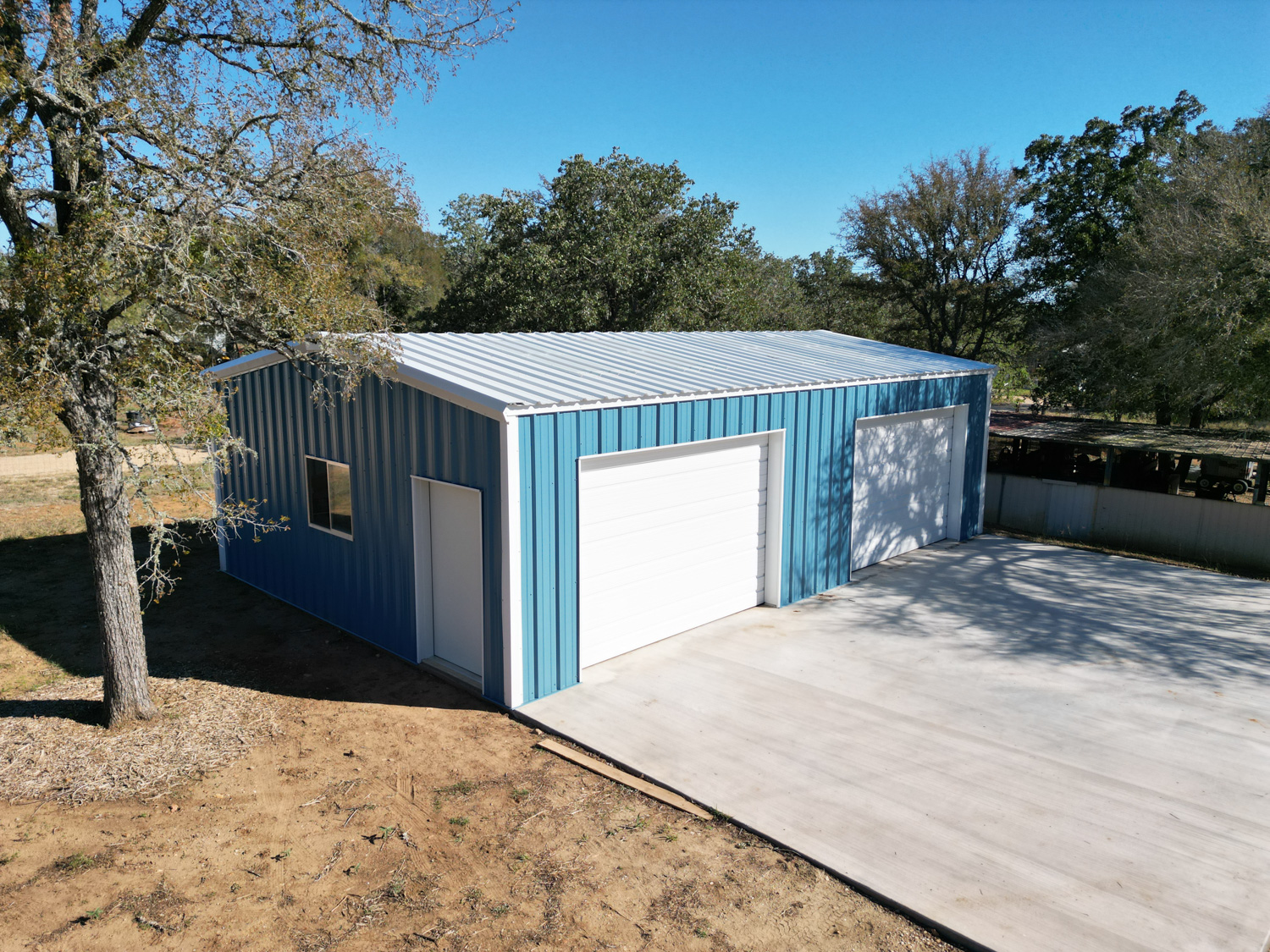
This 30x60 agricultural equipment storage building near Columbus, Texas highlighted how layout planning, access points, drainage considerations, and structural decisions all influence how a building performs over time.
Designed for a property owner purchasing his first pre-engineered metal building, the project focused on creating a practical storage solution that balanced equipment access, usability, durability, and long-term property functionality.
One of the biggest mistakes in rural building projects is designing only for immediate storage needs.
Because of this, agricultural equipment storage buildings should be designed around how the property will realistically function years from now, not just how it functions today.
For this project, that meant revisiting portions of the building layout during planning to improve equipment accessibility and overall workflow throughout the structure.
Additional framed openings were added to support easier equipment movement and reduce operational bottlenecks when moving equipment in and out of the building.
Small layout adjustments during design can significantly improve long-term usability.
Large agricultural equipment requires more than square footage.
It requires maneuverability.
In many equipment storage buildings, poor door placement creates unnecessary repositioning, difficult trailer access, and inefficient movement patterns inside the structure.
For this project, additional 12x10 framed openings were incorporated during planning to improve access throughout the building.
This helped create:
An additional pedestrian entry door was also added to improve day-to-day usability without requiring large equipment openings to remain open unnecessarily.
These types of access decisions may appear minor during planning, but they directly affect how functional the building becomes over time.
In many steel building projects, the building receives the majority of the attention.
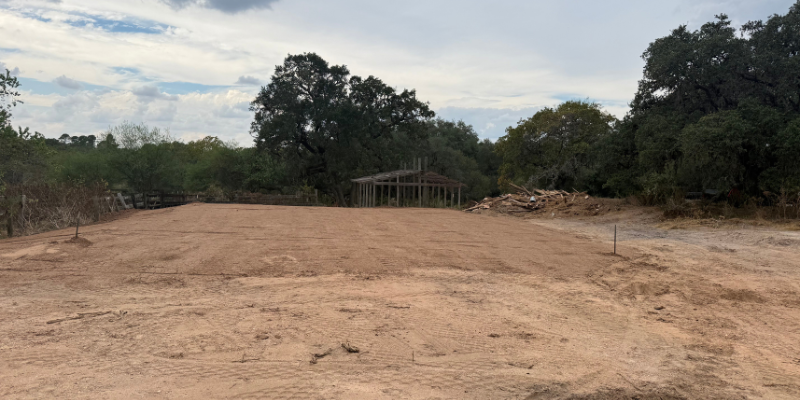
But site preparation often determines whether the property performs well long after construction is complete.
Poor drainage and improper grading can create ongoing maintenance problems around agricultural storage buildings.
Standing water, erosion, and runoff issues can affect:
During this project, drainage improvements and site-related adjustments were incorporated as construction progressed to improve long-term site usability and water management.
This reinforced an important reality in rural construction projects:
A building only performs as well as the site supporting it.
Agricultural storage buildings experience long-term exposure to moisture, changing weather conditions, and daily operational wear.
Because of this, structural material decisions matter.
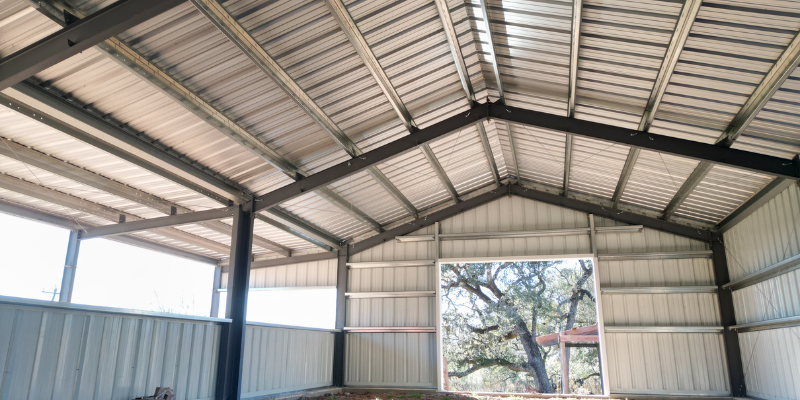
This project utilized a rigid frame pre-engineered metal building system designed around the site’s loading requirements and environmental conditions.
The building also incorporated pre-galvanized secondary framing components to support long-term durability and improved moisture resistance.
While some structural decisions are not immediately visible after construction, they can influence how well the building performs years later.
In agricultural environments especially, moisture management and durability planning should not be overlooked.
Bigger is not always better.
For many rural property owners, the goal is not maximizing square footage.
The goal is maximizing usability.
The 30x60 layout provided practical enclosed storage space while avoiding unnecessary overbuilding for the intended use.
Efficient building design can help property owners:
A properly planned layout often delivers more operational value than simply adding additional square footage without strategy.
Many metal building quotes appear similar on paper.
But the long-term value of a building often comes down to planning decisions that are not obvious in a basic price comparison.
Questions that matter include:
These decisions influence usability, maintenance, and operational efficiency long after construction ends.
For agricultural property owners, planning around operational reality often creates better long-term outcomes than focusing only on initial price.
Agricultural equipment storage buildings may appear straightforward, but long-term performance depends heavily on planning decisions made before construction begins.
This 30x60 project demonstrated how access planning, drainage coordination, structural decisions, and workflow considerations all contribute to creating a more functional rural storage building.
The goal was not simply to construct a metal building.
The goal was to create a practical storage solution that supports long-term property use and everyday operational functionality.
Muleshoe Building assures satisfaction by crafting steel structures that endure, reflecting integrity, innovation, and superior craftsmanship.
What sets Muleshoe apart is our commitment to Texas-tough, built-to-last metal buildings, transparent communication, and full-turnkey solutions. We deliver lasting value that goes beyond the initial investment, built right, start to finish.


