


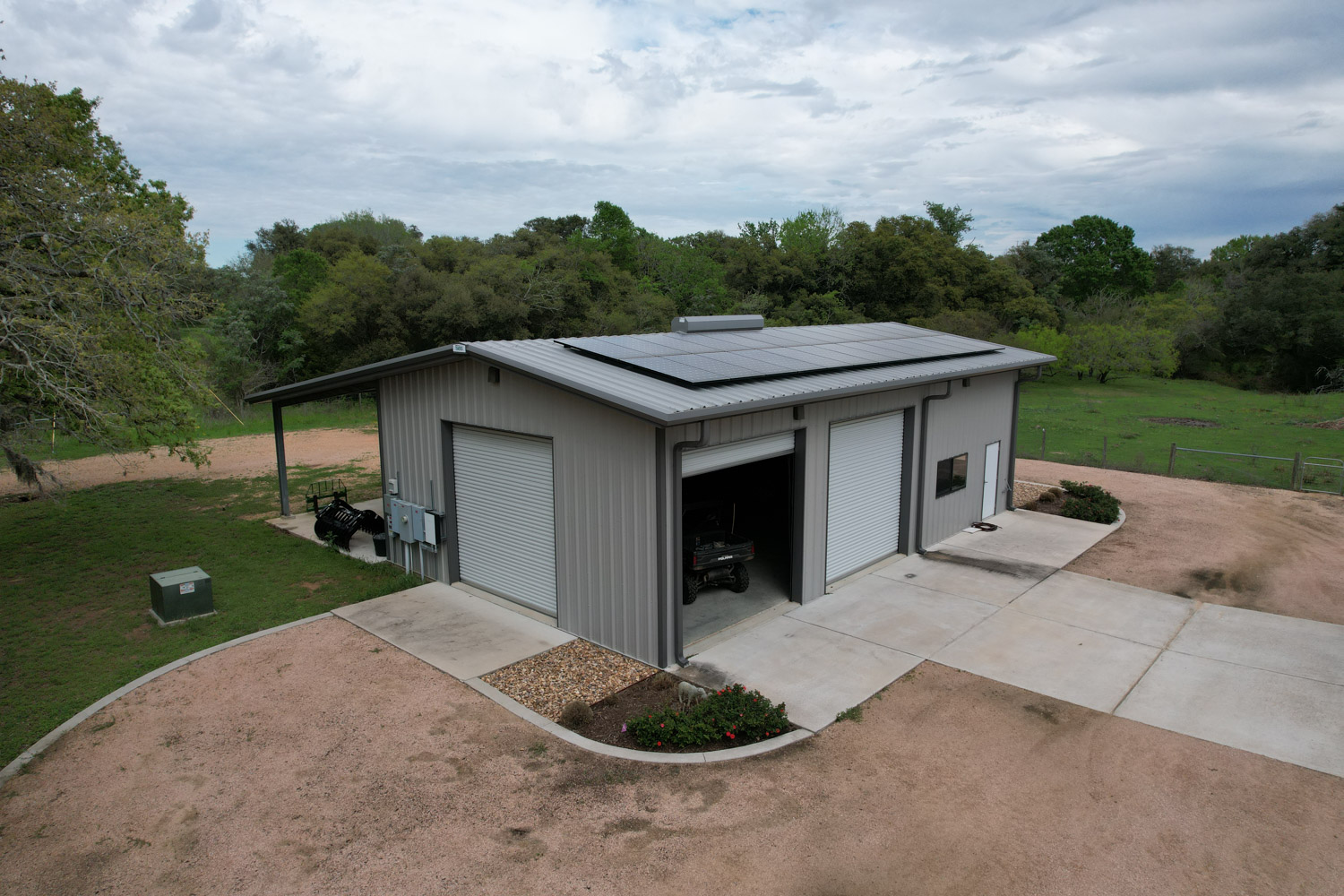
Pre-Engineered Metal Buildings
In-house designed pre-engineered metal buildings developed during the design meeting to match your needs, timeline, and budget, ensuring efficiency, accuracy, and fewer changes from planning through construction.

When people walk through a finished barndominium or custom metal building home, they notice the obvious things first: the layout, the windows, the finishes, the clean lines. What they usually do not notice are the construction details hiding behind the drywall that determine whether those finishes still look clean years later.
One of those details is the window buck system.
It is not a flashy topic or something most customers ask about. But in pre-engineered metal building construction, it can dramatically affect the final appearance, long-term durability, and overall quality of the finished project.
The difference between a smooth, professional finish and a frustrating interior trim problem often starts before the windows are ever installed.
In some applications, mounting a window directly into a steel-framed opening is perfectly acceptable.
For example:
In those situations, builders can often install the window directly into the steel framing because there is no future drywall, interior trim, or framed wall system that needs to align with it.
But residential living spaces are different.
Once a project includes:
…the window system has to do more than simply hold glass in place.
It has to integrate cleanly with the entire wall assembly.
That is where many low-detail builders run into problems.
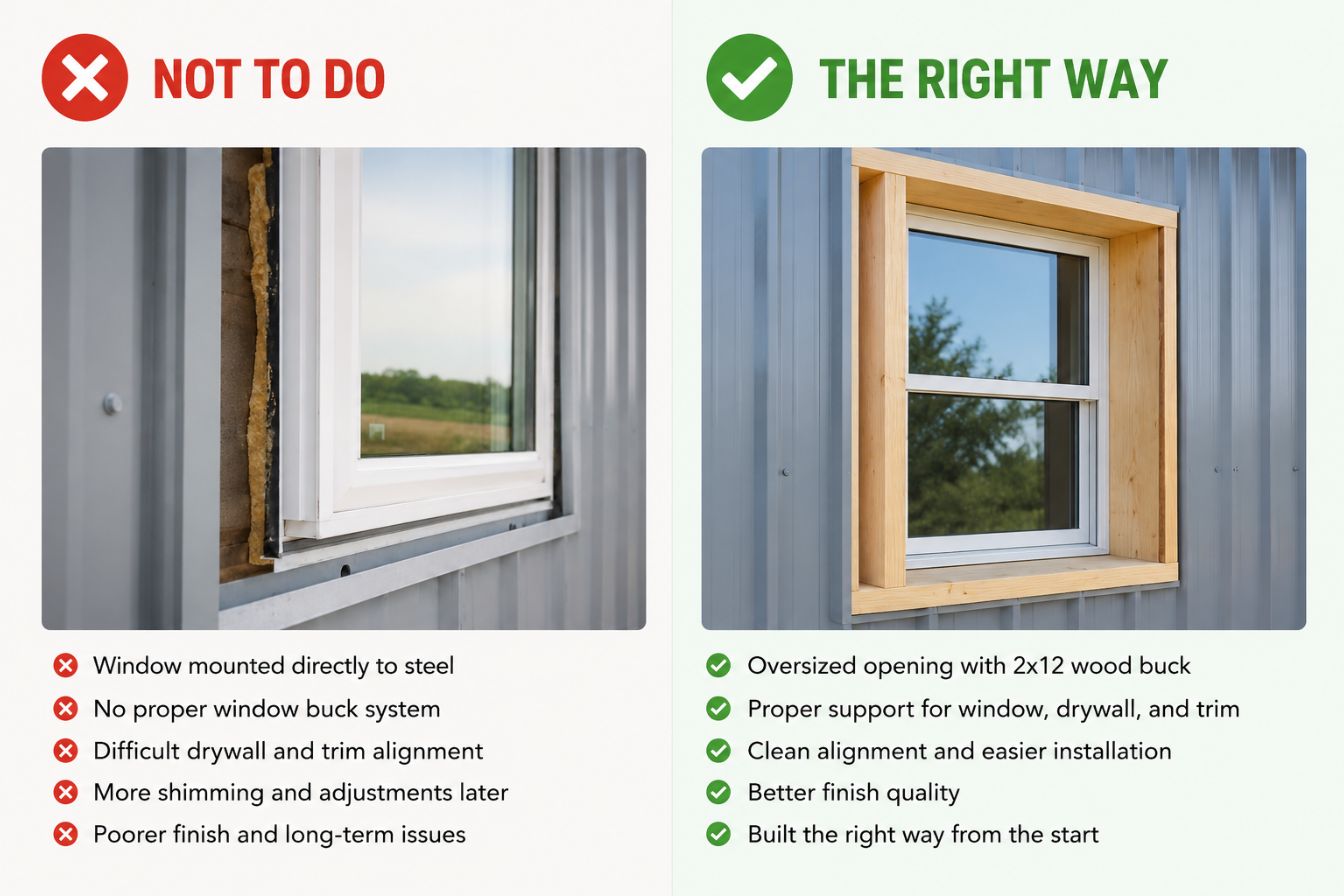
One of the most misunderstood details in PEMB construction is why experienced builders intentionally make the steel opening larger than the actual window.
The answer is simple: the opening is not just for the window itself.
It also has to accommodate the wood buck system surrounding the window.
For example, a standard 3050 residential window may technically require a 3-foot by 5-foot rough opening. But in a properly planned PEMB residential application, builders often add additional space around the perimeter to fit structural wood framing inside the steel opening.
That extra space allows room for the 2x12 wood buck system that future interior framing ties into.
Without that planning, the interior finish process becomes significantly harder later.
This is where many poorly planned barndominium projects begin creating problems for future trades.
When builders skip the wood buck system, framers and drywall crews often end up trying to “make things work” after the fact.
Typically, that leads to:
Instead of creating a properly integrated wall system from the beginning, trades are forced to compensate for misalignment later.
That usually increases labor, slows down finish work, and creates a less polished final appearance.
In many residential PEMB projects, builders use 2x12s for the wood buck system because they allow the future interior wall assembly to tie together correctly.
A typical setup may include:
The deeper 2x12 framing extends outward far enough to properly integrate with the future framed wall.
That creates:
Instead of forcing future trades to improvise around steel framing, the building is designed from the beginning to support residential interior construction.
Good construction is rarely about one individual trade.
The best projects are coordinated systems where every phase supports the next one.
A properly planned window buck system helps:
It also prevents situations where crews are forced to fasten directly into thick steel using oversized fasteners that are difficult to hide in finished interiors.
The result is a cleaner final product that looks intentional instead of pieced together.
One of the most common mistakes in residential metal building construction is treating a barndominium window installation exactly like a barn or shop installation.
Those are not the same building systems.
Many low-cost builders use self-flashing or single-pane window setups designed for non-finished spaces because they are cheaper and faster to install.
But once a building includes:
…the expectations change.
The window system must support both structural performance and interior finish quality.
That requires planning ahead before steel is ever erected.
There are absolutely situations where a wood buck system may not be needed.
For example:
In those cases, builders can often install the window directly into the steel opening itself.
If there is no future framed wall tying into the opening, the additional wood framing may not provide meaningful value.
The key is understanding the purpose of the space before determining the correct installation method.
One of the biggest misconceptions in construction is that finish quality depends entirely on the finish crews.
In reality, clean finish work usually begins during structural planning.
When window systems are planned correctly:
Most homeowners will never know why one building “feels” cleaner and more professionally finished than another.
But experienced builders know the difference is often hidden inside details like these.
Average builders focus on getting the building erected.
High-level builders focus on how the building will perform years later.
That difference often comes down to planning.
It means:
In pre-engineered metal building construction, details matter.
Anyone can install steel.
But creating a metal building that finishes cleanly, performs long term, and feels professionally integrated requires a much higher level of coordination and craftsmanship.
That is often the difference customers notice, even when they cannot immediately explain why one building simply feels better built than another.
Muleshoe Building assures satisfaction by crafting steel structures that endure, reflecting integrity, innovation, and superior craftsmanship.
What sets Muleshoe apart is our commitment to Texas-tough, built-to-last metal buildings, transparent communication, and full-turnkey solutions. We deliver lasting value that goes beyond the initial investment, built right, start to finish.


